How Spotify Discover Weekly Works and How to Improve It
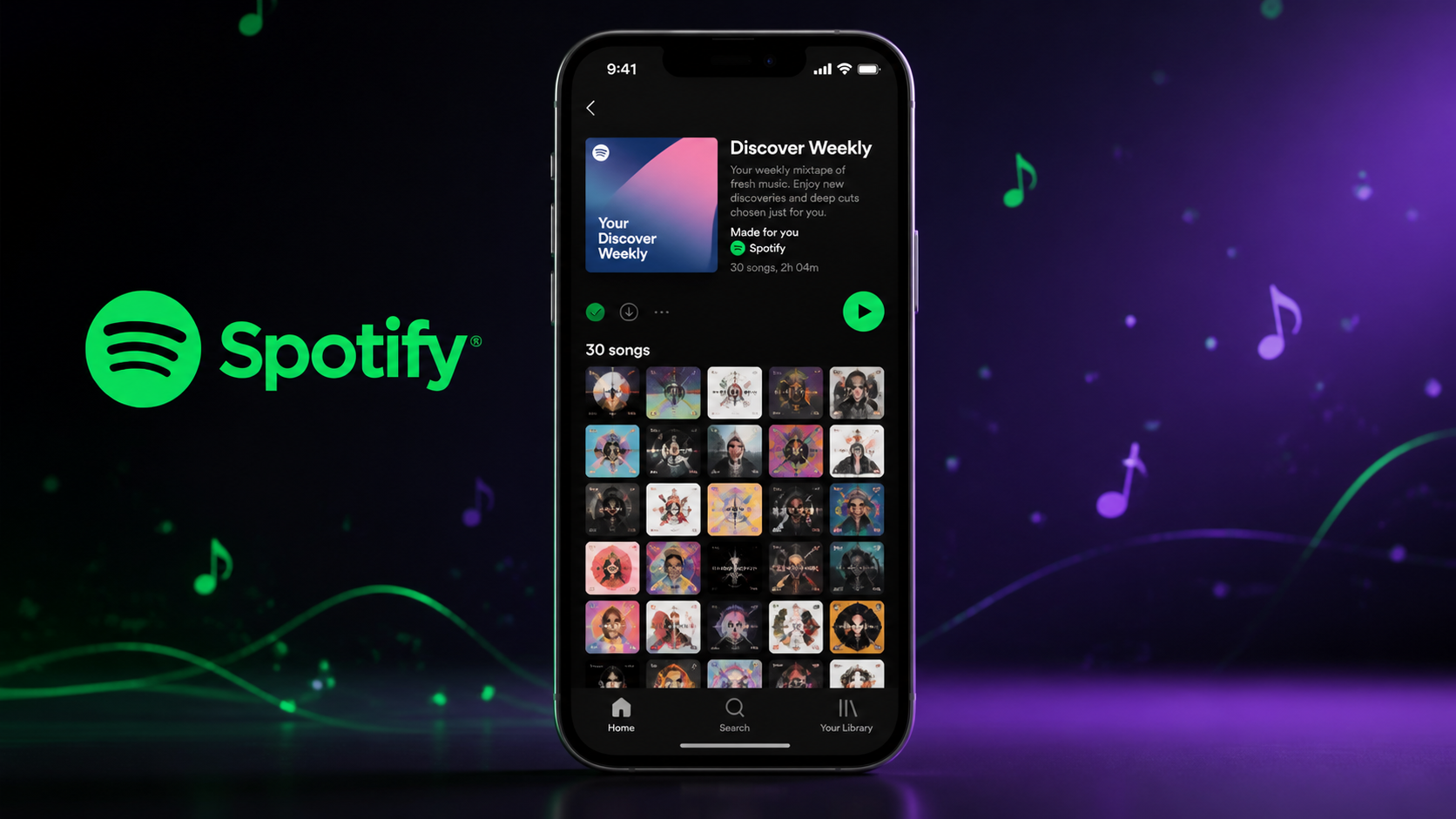
Every Monday morning, millions of Spotify users open the app to check one playlist first: Discover Weekly. For some listeners, it becomes a weekly habit because the recommendations feel surprisingly accurate. Spotify somehow manages to recommend artists you have never searched for while still matching your exact music taste.
Behind that experience is one of the most advanced music recommendation systems in streaming. Spotify Discover Weekly uses collaborative filtering, audio analysis, NLP (Natural Language Processing), listener behavior tracking, and machine learning to predict which songs you are most likely to enjoy.
The playlist updates once every week and usually includes 30 personalized songs selected specifically for your listening profile. Spotify studies the artists you follow, songs you replay, playlists you create, tracks you skip, and even how listeners with similar tastes behave on the platform.
But Discover Weekly is not perfect. Many users eventually notice repeated songs, inaccurate genres, or recommendations that no longer match their taste. The good news is that Spotify’s algorithm can actually be trained over time using better listening signals.
In this guide, you’ll learn how Spotify Discover Weekly works, why certain songs appear in your playlist, how the recommendation system analyzes your behavior, and how you can improve Discover Weekly recommendations naturally.
What Is Spotify Discover Weekly?
Discover Weekly is a personalized recommendation playlist available inside the Made for You section of Spotify. Every Monday morning, Spotify refreshes the playlist with 30 songs chosen specifically for each user.
Unlike editorial playlists created by humans, Discover Weekly is fully algorithm-driven. Spotify’s system studies your listening history and compares your behavior with millions of other users to identify songs you may enjoy but have not discovered yet.
The goal is simple: help users discover new artists while keeping recommendations aligned with their existing music tastes.
Over the years, Discover Weekly has become one of Spotify’s most successful features because it combines personalization with music discovery. Instead of recommending only popular tracks, Spotify tries to introduce songs that match your listening profile emotionally, stylistically, and behaviorally.
That’s why two users rarely receive the same Discover Weekly playlist.
How Spotify Discover Weekly Algorithm Works
Spotify Discover Weekly works by combining several recommendation systems. Instead of relying on one simple algorithm, Spotify uses multiple layers of machine learning and behavioral analysis to understand listener preferences.
The system mainly depends on three major technologies:
These systems work together continuously to improve recommendations.
Collaborative Filtering Explained
Collaborative filtering is one of the most important parts of Spotify’s recommendation engine. In simple terms, Spotify compares your listening behavior with that of other users who have similar music tastes.
For example, imagine you frequently listen to indie rock, synth-pop, and alternative electronic artists. Spotify identifies other users with similar listening habits and studies what they are currently enjoying. If thousands of similar users suddenly start streaming a new artist, Spotify may recommend that artist to you inside Discover Weekly.
This is why Discover Weekly often feels surprisingly personal, even when it recommends songs you have never heard before.
Spotify essentially builds “taste communities” across millions of listeners. If your music behavior overlaps heavily with another group of users, their favorite discoveries can become your future recommendations.
How Spotify Uses Audio Analysis

Spotify does not only analyze user behavior. The platform also studies the actual sound characteristics of songs using machine learning.
Its audio analysis system examines:
This allows Spotify to understand musical similarities beyond simple genre labels.
For instance, two songs might belong to completely different genres but still share similar emotional energy or production styles. Spotify can detect those patterns and recommend songs that “feel” similar even when they are technically categorized differently.
That’s one reason Discover Weekly often introduces artists from unexpected genres that still somehow match your taste.
NLP and Text Mining in Discover Weekly
Another major part of Spotify’s recommendation system is NLP, or Natural Language Processing.
Spotify analyzes huge amounts of text data from:
This helps Spotify understand how artists and songs are discussed across the internet.
For example, if blogs frequently describe certain artists as:
Spotify learns the relationships among those styles and connects similar artists.
This text-based understanding helps improve recommendations even before a song becomes massively popular.
How Spotify Understands Listener Intent
One of the most important ranking signals inside Discover Weekly is listener intent. Spotify constantly studies how users interact with music to determine whether recommendations are successful.
Positive listener intent signals include:
Negative signals usually include:
Spotify uses these behavioral patterns to improve future recommendations. If users consistently replay certain songs or artists, Spotify interprets that as high-quality engagement. On the other hand, songs with high skip rates may become less likely to appear in recommendation systems.
This is why your listening behavior matters so much. Spotify is constantly learning from every interaction.
Why Discover Weekly Shows Certain Songs
Many users wonder why Discover Weekly sometimes recommends strange genres or repeated artists. Usually, the answer comes down to long-term listening behavior.
Spotify builds a detailed music taste profile using:
The algorithm does not simply track what you like. It also studies what you avoid.
If you consistently skip certain genres, Spotify gradually reduces those recommendations. Similarly, if you repeatedly listen to mellow acoustic playlists late at night, the algorithm may start prioritizing calm and emotional recommendations during future Discover Weekly updates.
Over time, Spotify creates a highly detailed behavioral profile that continuously evolves with your listening habits.
How to Improve Discover Weekly Recommendations

If your Discover Weekly recommendations feel repetitive or inaccurate, the good news is that you can actively train Spotify’s algorithm.
The quality of Discover Weekly depends heavily on the quality of your listening signals. Better interaction data leads to better recommendations.
Save Songs You Actually Enjoy
One of the strongest positive signals in Spotify’s algorithm is saving songs to your library. When you tap the heart icon or add tracks to playlists, Spotify interprets that as confirmation that the recommendation worked successfully.
Users who consistently save music they genuinely enjoy usually receive much better Discover Weekly playlists over time.
Follow Artists Regularly
Following artists helps Spotify identify your core music preferences more clearly. It also improves other recommendation systems like Release Radar.
When you follow artists consistently, Spotify gains a stronger understanding of:
This helps the recommendation engine build more accurate music suggestions.
Create Personal Playlists
Creating playlists gives Spotify valuable context about your listening behavior.
For example, if you organize playlists like:
Spotify learns:
This creates stronger recommendation accuracy over time.
Reduce Excessive Skipping
Many users unintentionally confuse Spotify’s algorithm by skipping too many songs too quickly.
Frequent skipping creates low-quality behavioral data because Spotify struggles to determine what you genuinely enjoy.
Instead of skipping instantly:
Consistent listening patterns help the algorithm stabilize faster.
Use Private Session Strategically
Private Session is one of Spotify’s most underrated features for improving recommendations.
When enabled, Spotify temporarily stops using your listening activity for recommendation training.
This is extremely useful when:
Without a private session, Spotify may incorrectly assume those listening sessions reflect your actual taste.
How Long Does Discover Weekly Take to Improve?
Spotify’s recommendation engine learns continuously, but meaningful improvements usually happen gradually.
Most users notice:
Spotify performs best when users provide stable and consistent listening signals over time.
This is why completely new Spotify accounts often receive weaker Discover Weekly recommendations initially.
Discover Weekly vs Release Radar
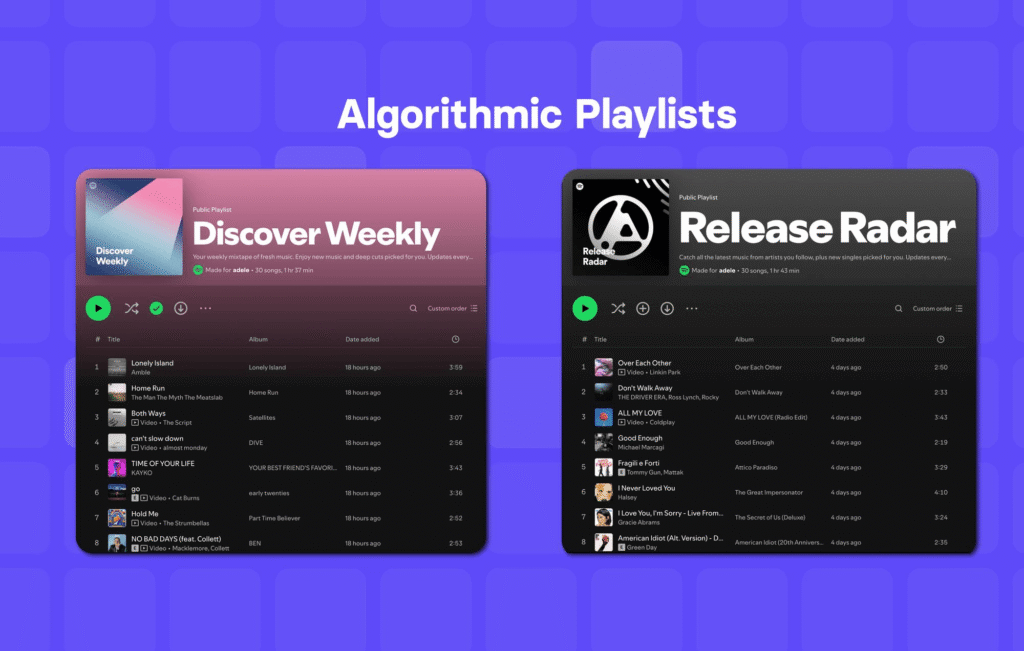
Many Spotify users confuse Discover Weekly with Release Radar because both are personalized playlists. However, they serve different purposes.
| Feature | Discover Weekly | Release Radar |
|---|---|---|
| Update Day | Monday | Friday |
| Goal | Discover new artists | Track new releases |
| Songs | 30 personalized tracks | New releases from followed artists |
| Main Focus | Discovery | Artist updates |
Discover Weekly focuses on introducing unfamiliar music, while Release Radar prioritizes newly released tracks from artists you already follow or frequently stream.
Together, these playlists form the core of Spotify’s personalized recommendation ecosystem.
Common Discover Weekly Problems
Although Spotify’s recommendation system is powerful, users still experience occasional problems with inaccurate recommendations or playlist behavior.
Discover Weekly Not Personalized
If your playlist feels random or unrelated to your taste, Spotify likely lacks clear behavioral signals.
This commonly happens because of:
Improving your listening consistency usually fixes the issue naturally over time.
Discover Weekly Repeating Songs
Sometimes Spotify becomes overly dependent on familiar genres or artists. This can make Discover Weekly feel repetitive.
To refresh recommendations:
The broader your listening profile becomes, the more diverse your recommendations usually get.
Discover Weekly Not Updating
Discover Weekly refreshes every Monday morning. If your playlist does not update properly:
- Restart Spotify
- Clear cache
- Update the app
- Log out and back in
Most update issues are temporary syncing problems rather than permanent algorithm failures.
How Artists Get Featured on Discover Weekly
For artists, Discover Weekly can become a major growth source. Songs that perform well in Spotify’s algorithm may receive thousands, sometimes millions, of additional streams through personalized recommendations.
Spotify studies listener behavior carefully before recommending tracks broadly.
Songs with strong engagement metrics usually perform better, including:
When listeners consistently interact positively with a track, Spotify becomes more confident recommending it to similar users.
This is why strong listener intent matters so much for artists trying to grow on streaming platforms.
Advanced Tips to Train Spotify’s Algorithm
Users who want highly accurate recommendations can intentionally shape Spotify’s understanding of their taste profile.
One effective strategy is creating genre-specific playlists rather than mixing everything. Organized listening behavior helps Spotify understand emotional and stylistic patterns more clearly.
Using Spotify Radio features can also improve recommendation quality because artist radio and song radio create stronger relationship mapping between similar artists.
Replay behavior is another major ranking signal. Songs you repeatedly revisit tell Spotify far more about your taste than songs you casually stream once.
Over time, these behaviors help Discover Weekly become increasingly personalized.
Does Spotify Discover Weekly Use AI?
Yes. Spotify Discover Weekly heavily relies on AI and machine learning systems.
Spotify combines:
The platform continuously trains its algorithms using billions of listening interactions collected across the app.
Conclusion
Spotify Discover Weekly uses AI, collaborative filtering, audio analysis, and listener behavior tracking to recommend personalized songs every Monday. The better your listening signals, like saving songs, following artists, and creating playlists, the more accurate your recommendations become over time.
Whether you want better music discovery or you’re an artist trying to reach new listeners, understanding how Spotify’s recommendation algorithm works can help you improve your results significantly.
How long does Spotify need to learn my music taste?
Most users notice stronger personalization after 30–90 days of consistent listening behavior.
Can artists get featured on Discover Weekly?
Yes. Songs with strong engagement metrics and positive listener intent signals may appear inside Discover Weekly recommendations.
How can I improve Discover Weekly recommendations?
Having songs, following artists, replaying tracks, creating playlists, and reducing excessive skipping all help improve recommendations.
How often does Discover Weekly update?
Discover Weekly refreshes once every week on Monday morning.